Table Of Content

Additionally, modern cruise ships are required to have enough lifeboats and life rafts to accommodate all passengers and crew. These lifeboats are equipped with essential supplies such as food, water, and medical equipment to ensure that passengers and crew can survive in the event of an emergency. Following the Titanic disaster, the International Convention for the Safety of Life at Sea (SOLAS) was established to ensure that ships were equipped with proper safety measures and emergency procedures. SOLAS is still in effect today and requires modern cruise ships to have a variety of safety features, including lifeboats, life rafts, and other emergency equipment.
Cruise Ship Size Comparison
Visualized: Comparing the Titanic to a Modern Cruise Ship – Visual Capitalist Licensing - Visual Capitalist Licensing
Visualized: Comparing the Titanic to a Modern Cruise Ship – Visual Capitalist Licensing.
Posted: Thu, 15 Apr 2021 07:00:00 GMT [source]
These two ships are just 36 feet wide, so around 40% of the width of the Titanic, which was built around a century earlier. The Titanic’s gross tonnage was 46,328 while the average ship in today’s world would have a gross tonnage of around 77,000. So the Titanic was around 40% smaller than your average cruise ship today. A cruise liner is a ship that is designed for one-way travel, and we don’t tend to have them in modern times – people prefer to use planes since they’re so much faster. But in 1912, when commercial flights weren’t a thing (the first aircraft was only successfully trialed 9 years earlier), passenger ships were the default option for long-distance travel. The restaurant is one of the earliest examples of extra-cost dining on a cruise ship.
Passenger capacity
Ocean liners like the Titanic were built much more for transportation than leisure. With two or four cabins per stateroom, second-class travelers slept on bunk beds. Bunk beds are still common on cruise ships, especially in family-sized cabins. Cruise ships typically don’t need fast speeds because they typically travel short distances between ports over the course of days, unlike ocean liners that travel long distances over long periods of time. For reasons of safety and fuel efficiency, however, they never move at top speed.
Icon of the Seas vs Titanic: A Giant Comparison - Cruise Hive
Icon of the Seas vs Titanic: A Giant Comparison.
Posted: Mon, 19 Feb 2024 08:00:00 GMT [source]
Titanic vs Cruise Ship Comparison (Size, Cabins, and More)
Surprisingly, the draft of large ships like the Titanic and modern cruise ships hasn’t changed significantly. For instance, the Titanic had a draft of 33 ft. (10 m), allowing it to navigate deep waters comfortably, whereas modern cruise ships like Icon of the Seas have a slightly lower draft of 30 ft. (9 m). For instance, Royal Caribbean’s Icon of the Seas has a beam of 159 ft (48 m), and the Wonder of the Seas measures slightly narrower at 155 ft. (47 m). Even Royal Caribbean’s smallest ship, the Majesty of the Seas, has a beam of 105 ft. (32 m), which still exceeds the Titanic’s width by quite a lot. Rather than speed, all 3 Olympic-class ocean liners were built for size and luxury for it’s highest paying passengers. Transporting people or goods between locations is the main function of ocean liners.
Best Clearwater Dinner Cruises For Delightful Evening
The next world’s largest cruise ship not yet launched but on order is Royal Caribbean’s Wonder of the Seas, slated to debut in 2022, and it measures much the same. When it comes to speed, the Titanic was a relatively fast ocean liner for its time. Speed was an important factor for transatlantic liners like the Titanic, which aimed to reduce travel time between Europe and North America. On average, cruise ships today have a draft of about 20 ft. (6 m), which is less than the Titanic’s.
Recreational facilities have also undergone significant transformations since the days of the Titanic. While leisure activities were limited back then, modern cruise ships are equipped with an array of onboard spas, fitness centers, swimming pools, water parks, and even rock climbing walls. Despite its fame and the luxury it offered passengers, the Titanic wasn’t actually a cruise ship. Instead, it was an ocean liner, a type of ship designed for transporting people across the ocean from one point to another. Ocean liners usually have a stronger build and a deeper hull to handle rough sea conditions. They typically operate on fixed routes, like the transatlantic crossings between Europe and North America.
However, this growth pales in comparison to that of sky-rise buildings. Welcome to High Seas Cruising, your resource for exploring the exciting world of cruise ship travel. We provide expert advice, insightful reviews, and comprehensive guides to help seasoned and novice cruisers create their ideal sea journeys. Whether you desire adventure, luxury, or exploration, High Seas Cruising is your compass to unforgettable cruise vacations.
Safety features and navigation systems comparison
Icon of the Seas is over twice the width of the Titanic, and while we don’t have the exact width yet, we know it’ll be over 210 feet compared to just 92.5 feet. It’s also where the Icon of the Seas exceeds many of the other ships being built today, which will average often as little as half that again. The current largest ship in the world is the Icon of the Seas, which Royal Caribbean took ownership of in December 2023 ahead of her first passenger cruises in early 2024. But again, there is context to consider as this also includes the smallest ships in the world, of which there are many. And these smaller ships are often designed for very small passenger numbers, meaning they aren’t particularly wide at all. You can see from the chart above that building size has grown significantly faster than cruise ship size.
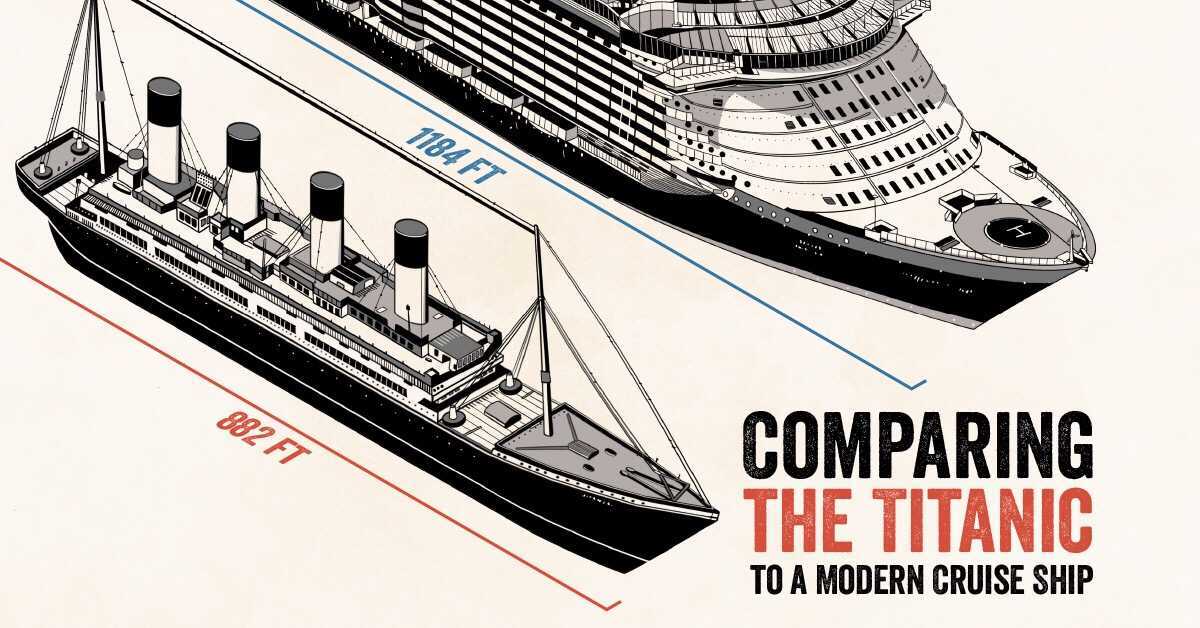
Titanic’s Length vs. Modern Cruise Ships
Passengers can indulge in international cuisine prepared by world-class chefs at specialty restaurants or opt for casual fare at buffet-style eateries. Gone are the days of simple piano music in the background and limited dining choices. Today’s cruise ships offer a wide array of entertainment options that rival those found on land, as well as an extensive selection of dining venues to satisfy every palate. Thanks to remarkable technological advancements, communication systems between crew members and passengers during emergencies have significantly improved on contemporary cruise ships. In the past, when a crisis unfolded at sea, it was often challenging for those onboard to communicate effectively with each other or with authorities on land.
Unlike the Titanic’s limited seating options, contemporary ships feature deck layouts designed with relaxation in mind. Picture yourself lounging on spacious sunbeds while sipping a refreshing drink, or seeking shade under elegantly designed canopies. These thoughtfully created outdoor spaces provide the perfect setting for unwinding and enjoying the gentle sea breeze. Themed parties have also become a popular form of entertainment on modern cruises. The vibrant nightlife onboard is further enhanced by onboard casinos, nightclubs, and bars that cater to those seeking excitement after sunset.

This level of personalization and convenience was unimaginable during the time of the Titanic. Modern cruise ship cabins often feature mini-fridges where passengers can store their favorite snacks or beverages. This added convenience allows travelers to have refreshments readily available within their cabins. One notable improvement is the availability of private bathrooms in most contemporary cruise ship cabins. Unlike the shared facilities on board the Titanic, guests can now enjoy their own personal space without having to wait or share with others.


No comments:
Post a Comment